benefits of using a flexible PCB board
A flexible PCB is a circuit board that is designed to be able to bend, twist and curve. This is often used in applications where the equipment is likely to be subject to a lot of stress and vibration, such as drones or wearable devices. The flexibility of the flex circuit can be very beneficial in these applications as it helps to ensure that the device continues to function correctly, even when subject to stress or vibration.
Unlike traditional PCBs, which are made up of a rigid base layer that connects via soldering, the flex circuit has a flexible base raw material that is then covered with layers of different materials, including dielectric and conductor. The conductors are etched on the surface of the base raw material and the layers are then bonded together using various types of adhesives. These include acrylics, epoxies and pressure-sensitive adhesives.
The resulting flexible pcb board can be manufactured in a wide variety of construction and materials, from simple two-layer boards to complex, high-density designs that may require more than 20 layers. The thickness of the substrate, the number of layers and the presence or absence of plated-through holes can be tailored to suit specific applications. The most advanced flex circuits are manufactured to military and aerospace specifications, which often require the highest levels of inspection, testing and performance.
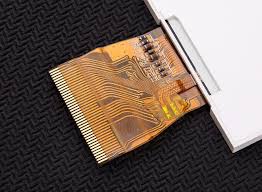
What are the benefits of using a flexible PCB board?
Another advantage of a flex circuit is that it can be produced in large panels, which allows the circuits to be easily and quickly assembled into an overall device. This reduces the need for manual work, such as cutting and wrapping wires around a PCB and can help to lower production costs. It also makes the process of assembly faster and more efficient.
Flex circuits are also able to handle a great deal of temperature and have excellent resistance to chemicals and radiation, making them ideal for use in harsh environments. They are also extremely durable, with fewer connections that could fail, which can be a problem with some other types of PCBs.
The flexibility of a flex circuit also means that it can be a good choice for situations where the device must be able to fold or curve, such as in a laptop or flip phone. Similarly, the read/write heads of disk drives are often constructed with flex circuits in order to allow them to bend and absorb vibration during operation.
The conductive lines on a flex circuit are etched on a thin substrate that is usually polyester or polyimide, which is then laminated to a transparent coverlay for insulation and protection. In some multilayer flex PCB constructions, additional dielectric stiffening layers are used to minimize wrinkling and buckling under thermal stresses. A solder mask is applied to the conductor pattern, and a hot-air solder leveling (HASL) finish is used to protect exposed pads from moisture.